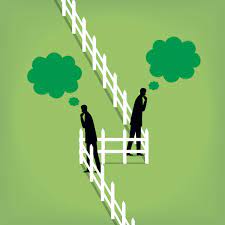
Quit making separation so hard on your children…

I am by no means a parenting expert and I won’t claim to be.  I am, however, an expert on trauma and throughout the personal and professional portions of my life I have witnessed patterns of behaviors in parents, usually parents who are separated but sometimes parents who are still living together, which have a negative effect, emotionally and psychologically, on their children.  Some of these behaviors could be classified as emotional abuse and, in many cases, lead to long term mental health concerns in the children like anxiety, depression, feelings of shame and guilt, attachment disorders, and the like. 

I am going to cover a few different topics here as areas of consideration that might stand out to someone and could improve the life of a kiddo somewhere out there.  Each point is unique to itself, but they may also relate to the others.  Additionally, each point comes from a place of research and a place of opinion.  If you want to pinpoint your specific stance, please do the research.  Start asking questions.  Learn both sides. Do some detective work.

The first point is about parental pain.  When a relationship ends, there can often be some strong feelings.  Sadness.  Hurt.  Heartache.  Resentment.  Anger.  A great and highly recommended option in these situations would be for the parents to make their own healing a priority to prevent those feelings from spilling over onto their children.  Find a counselor.  Get a coach.  Work through your past and your pain.  Sometimes when a person is unhealed, they want the person who caused their pain to feel what they feel, or they want to cause pain purely out of spite.  They may lash out.  They may behave in ways they normally wouldn’t.  They may try to hurt or sabotage the other parent.  They may try to cause pain through their children.  We should not be teaching children to deal with their own hurt by causing harm to others.  Whether it was the intention or not, children mirror what they see.  Also, children should have the opportunity to heal and should have access to knowledgeable and compassionate professionals who neutrally help them work through what is happening in their family.  If tolerable, family counseling could also be an option for both parents and the involved children so the children can see how to work through conflict and be reassured that nothing is their fault, and they are not in the middle of adult problems.

The second point is about custody.  I can’t say what any specific situation looks like, or what any specific home or relationship dynamic is, each situation is unique and must be addressed as such.  I can say, that if both parents are able to provide for their children and offer a safe and stable environment with similar quality time, then 50/50 custody and coparenting should be the standard.  There is research and opinions and other information for days.  It has been found that children who spend half time with each parent have less psychological symptoms than any other arrangement.  When a couple separates, the decisions that are made for the children should be made with the best interest of the children at heart.  Period.  Parents cook different, keep house different, have different rules and expectations, relate more to one gender over another, and those should be respected as part of a coparenting agreement unless there is a true safety concern or threat of harm.  If a decision is being made without the children’s best interest at the forefront or out of resentment, I’ll refer back to the parent working on their own much needed healing.  Putting children in situations where they must make hard decisions not intended for children to make or pinning them between one parent and another can be very uncomfortable and painful for the children. Even when those children become adults. Children who see and receive love and respect, respond with love and respect. Children who see and receive contention and hatred and arguing, respond similarly.  These responses may not be what they present in public, but they could very well become an inner voice that they fight and feel shame about.

The third point is about parental alienation.  Dr. Richard Gardner created the phrase “parental alienation syndrome” in 1985 and wrote extensively about it. He defined the syndrome as:

a childhood disorder that arises almost exclusively in the context of child-custody disputes. It is a disorder in which children, programmed by the allegedly “loved” parent, embark upon a campaign of denigration of the allegedly “hated” parent. The children exhibit little if any ambivalence over their hatred, which often spreads to the extended family of the allegedly despised parent (“Recommendations for Dealing with Parents Who Induce a Parental Alienation Syndrome in Their Children,” Journal of Divorce and Remarriage 28, nos. 3-4 [1998]).

Descriptors of parental alienation include:

  1.  The child expresses a relentless hatred for the targeted parent.
  2. The child’s language parrots the language of the alienating parent.
  3. The child vehemently rejects visiting the targeted parent.
  4. Many of the child’s beliefs are enmeshed with the alienating parent.
  5. Many of the child’s beliefs are delusional and frequently irrational.
  6. The child’s reasons are not from direct experiences but from what has been told to him or her by others.
  7. The child has no ambivalence in his or her feelings; they are all hatred with no ability to see the good.
  8. The child has no capacity to feel guilty about his or her behavior toward the targeted parent.
  9. The child and the alienating parent are in lockstep to denigrate the targeted parent.
  10. The child can appear like a normal healthy child. But when asked about the targeted parent, it triggers his or her hatred.

(Retrieved from https://www.ncsc.org/__data/assets/pdf_file/0014/42152/parental_alienation_Lewis.pdf)

Parental alienation can have devastating effects on a child which include “an impaired ability to establish and maintain future relationships; a lowering of the child’s self-image; a loss of self-respect; the evolution of guilt, anxiety, and depression over their role in destroying their relationship with a previously loved parent; lack of impulse control (aggression can turn into delinquent behavior); and educational problems, disruptions in school (https://www.ncsc.org/__data/assets/pdf_file/0014/42152/parental_alienation_Lewis.pdf).

Dr. Gardner stated that parental alienation should be considered child abuse and handled criminally.  It has been found that when children spend equal time with each parent or more time with the targeted parent, parental alienation is less likely as the children will see the true person and the positive attributes of the other parent.  It is easy to condition and alienate when a child only hears one side and only sees one home.

**Any time an adult/parent speaks poorly about another adult/parent to a child, IT IS MANIPULATION! 

Children should not be responsible for holding that type of information.  If there is a true safety concern, it is a parent’s job to protect the child (usually in court) until they are old enough to have the need to protect themselves (age of adulthood), at which time, they can be provided the necessary information and then appropriately process in the right context.  The cognitive development of children, even into the early 20s, affects how they can handle this type of information, especially if there is a history of manipulative behavior.

I get calls and messages frequently from friends and family and it comes up with coaching clients about custody concerns, situations where there appears to be parental alienation, and just plain disrespectful relationships.  Again, I am no expert in parenting, each situation is different, but I hope that the previous points give some insight and may help someone find a direction if faced with similar issues.  Sometimes we don’t know there is a problem unless we look and we definitely never get the proper support until we know there is a problem. It appears these topics are becoming more and more common these days.  Separations hurt.  Not being with your kids hurts.  But, personally, knowing I caused harm to my child is too much.  I would do whatever I needed to do to deal with my pain to have a positive coparenting relationship for the sake of my child.  My husband and I have a happy and healthy marriage, but we have had these discussions to put plans in place that if something were to ever happen we would make the best choices, together, for our child. Will it be hard?  Yes.  Will it hurt?  Likely.  Will it be worth it?  Hell yes.

If you see yourself in any of the things I have discussed, seek support.  There are counselors who are knowledgeable about these topics.  If you are a minor and identify with anything I have shared, reach out to a safe adult.  If you are a parent who is struggling in one of these areas, start your healing journey, put your children above yourself, and seek help.  You may think you are doing something for the benefit of your children but, you could be causing them long term damage and psychological harm.  Please don’t involve your children in adult matters and don’t teach your children hate.  Move forward treating the other parent how you wish to be treated and give your children the best chance at healthy adult relationships, stable attachments, and positive mental health.

*Disclaimer, as stated throughout, these statements are for situations in which both parents can offer safe and stable homes.  In cases of abuse, neglect, violence, etc. the responses would be very different.

“CrazyWise” My take on the documentary

Today I had the honor of participating in a screening of the documentary “Crazywise” followed by a panel discussion by Dr. Gabor Mate and Phil Borges.  The content within the documentary shared so many of my thoughts which have led to many of my professional behaviors and values as they relate to the mental health system in our society and our approaches to healing.  I have designed my coaching and consulting business around ideas and movements like these. 

The description of the documentary from the website (CrazyWiseFilm.com) is as follows:

“What can we learn from those who have turned their psychological crisis into a positive transformative experience?

During a quarter-century documenting indigenous cultures, human-rights photographer and filmmaker Phil Borges often saw these cultures identify “psychotic” symptoms as an indicator of shamanic potential. He was intrigued by how differently psychosis is defined and treated in the West.

Through interviews with renowned mental health professionals including Gabor Mate, MD, Robert Whitaker, and Roshi Joan Halifax, PhD, Phil explores the growing severity of the mental health crisis in America dominated by biomedical psychiatry. He discovers a growing movement of professionals and psychiatric survivors who demand alternative treatments that focus on recovery, nurturing social connections, and finding meaning.

CRAZYWISE follows two young Americans diagnosed with “mental illness.” Adam, 27, suffers devastating side effects from medications before embracing meditation in hopes of recovery. Ekhaya, 32, survives childhood molestation and several suicide attempts before spiritual training to become a traditional South African healer gives her suffering meaning and brings a deeper purpose to her life.

CRAZYWISE doesn’t aim to over-romanticize indigenous wisdom, or completely condemn Western treatment. Not every indigenous person who has a crisis becomes a shaman. And many individuals benefit from Western medications.

However, indigenous peoples’ acceptance of non-ordinary states of consciousness, along with rituals and metaphors that form deep connections to nature, to each other, and to ancestors, is something we can learn from.

CRAZYWISE adds a voice to the growing conversation that believes a psychological crisis can be an opportunity for growth and potentially transformational, not a disease with no cure.”

Here are a few of the thoughts that stood out to me while watching the documentary and listening to the panel:

1. The Diagnostic Statistical Manual has evolved into a way to avoid truly listening to people.  The sheer numbers of diagnostic criteria that has been developed makes almost everyone diagnosable and this is inappropriate.  For example, grief from loss is a normal human feeling, not a diagnosable mental disorder.

*The focus in certain settings is often on finding that diagnosis for funding/grants, insurance, billing, etc.  I will add that the over importance of diagnosis (and medicating) takes away such an important part of healing which is relationships and connections.

2. We live in a psychotic world, many of us are psychotic, if we accept the definition that psychotic is being out of touch with reality. 

*How many of us does this apply to?  How many in our society are detached?  How many hide behind a screen or conspiracy theories or isolation or our jobs or some other type of dissociation?

3. Healing is about relationships.  We CANNOT heal in isolation.

4. Suppressing feelings leads us to lose touch with ourselves and has negative consequences. 

*How often do we see this in society?  Boys don’t cry…Anger is hostile…they are unstable…women are emotional…How many can you identify?

5. Culture and cultural practices are so important in healing,

6. Diagnoses are nothing without meaning and explanation.

7. We need to spend more time feeling our feelings rather than talking about them and explaining them.

8. Crisis can serve as a portal to growth.  It can be seen as an opportunity.

As I watched this documentary, I could see client after client over the course of my career who could have had much improved outcomes had the “system” that is in place treated them as a human, as a relationship, as a life and focused on their feelings, the root of their pain, and their healing rather than their diagnoses.  There is so much information out there that promotes the use of non-Western practices to heal and there is much success.  Healing occurs through connecting with our mind, body, spirit, nature, and others.  Healing is possible and I love all the people who are sharing it with the world! I love sharing it with the world!

*I have no connection to “CrazyWise” and am sharing based on my own experiences.  There are benefits to diagnoses and medications in some instances and none of this blog should be taken as medical advice.  I did purchase the DVD and am excited for its arrival so I can watch the documentary a few more times and really absorb everything they shared.

You do not have to compete with “The Group”

I grew up in a small town just up the road from the middle of nowhere. It was a fine enough small town to grow up in but, much like other towns, there was an established social structure. It may or may not have been spoken about, I was a child, so I do not know, but you learned early on that it existed and that you respected it. If you did not have a certain name, if your family did not own a business, if you did not look or dress a certain way, if you did not fit into a small set of categories, then you were not a part of “The Group.” I do not know what “The Group” did that was so special, but that specific group was simply better than all the other groups. I do not recall anyone ever rising up the ranks (terrible analogy) and joining “The Group” but I do remember people who had previously been welcomed becoming an outsider of the “The Group.”  I am guessing those people somehow made “The Group” look bad.

In 4th grade, my family moved away for just one year and I went to a private, Catholic school. I was told by neighbors in our trailer court that it was nice to wear uniforms to school because everyone dressed the same, but shoes and jewelry would give it away as to how much money your family had. I was instructed to never tell people where I lived because it would be embarrassing if anyone found out that I lived in a trailer house and took the bus to school. Whether this was real, or the opinion of a jaded middle school neighbor, I feared being rejected because of the house we lived in and the shoes I wore.

By 6th or 7th grade I remember knowing that I was not as good as “The Group.”  I compared myself to them. I felt less than them. I never felt good enough because I did not fit in. I think I would have done almost anything to be one of them. In those moments of adolescence, “The Group” became my inner voice. It was about your name, your income, your clothes, your job (or in this case, your parent’s jobs). In those moments, being the completely normal, self-centered, egocentric pre-teen that I was, I thought it was all me and I thought I was the only one. It was all my fault and I had done something inherently wrong. I was born into the wrong family. We were poor by most standards. I had unruly, fiery red hair. I thought I was fat (I now wish I were as fat as I was when I thought I was fat as a teenager). My clothes were mostly second hand and hand-me-downs. From a purely socioeconomic standard, I could understand why I did not fit in “The Group” but I longed to be accepted. I had amazing friends (many of them lifelong) and we had the best time, but “The Group” always loomed as the standard.

As an adult, I have had conversations with friends and classmates and have realized that many people felt the same way growing up where we did. And yet others from elsewhere had felt the same way in their respective towns or schools. It is a strange thing, those grossly designed social structures.

My senior year of high school rolled around, and my family moved again. I had to start over in a new school for the last year of high school. I was sad to leave my amazing friends, not sad to leave “The Group,” and fearful of what “The Group” at the next school would be like. Well, because we were new and had no previous ties to that community, I felt like a shiny new toy (another terrible analogy). No one cared what my family made or did or our name. People just treated me like the new girl who they had not gotten to know yet. It was fabulous. I got to be me. I am sure eventually the shine would have worn off and I would have identified “The Group,” but before that happened it was time to go to college. At college, we were all in the same position, away from home, unknown to most anyone, and figuring out adulthood. Another fabulous experience. I got to be me. We had the freedom to show our true selves and find our own groups not “The Group.” We got to find the people that fit us and honored who we were and more than likely did not care what shoes you wore as long as they could run fast when the cops showed up at the underage party.

I can not say that I noticed “The Group” again until after college when I started settling into a community, a job, and a routine. “The Group” is not as obvious, or it is easier to ignore, in larger towns but it sure has a strong vibe in smaller towns.

As an adult, “The Group” hits differently. At least for me, it is less of the standard and more of the inner voice. The voice that tells you over and over that you are not enough, you do not have enough, you do not fit in. That voice is so annoying! That voice is outdated. That voice is based on ridiculous social standards that were established by insecure adults who passed on their behavior to their children which then infiltrated the day to day lives of everyone it touched. I did not know the phrase “keeping up with the Joneses” when I was younger, but I do now, and the Joneses are unhappy and broke. Maybe not all of them, but I think a good chunk. I have spent time in “The Group.”  It felt awesome. And it was exhausting. The food is fancy, but it I much prefer home cooking. The clothes look amazing, but they are not comfortable. The lifestyle looks like something to envy but it is expensive and burdensome and time consuming. It ends up feeling very shallow and disingenuous.

I spend a lot of time observing. I think it is an unspoken requirement of having a degree in psychology. I watch people. I study behavior. I analyze interactions. And I have learned so much about these social structures and “The Group.”  The biggest thing that I have learned is that most people in “The Group” are behaving the way they are because they do not feel adequate, and they are silently competing with someone else in the group for some type of invisible award. Secondly, as I indicated before, many of them are broke. They spend money they do not have or wrack up their charge accounts to feel adequate. Lastly, a lot of the connections within “The Group” are superficial. They feel real. They feel like the best friends you will ever have, but they are the just the best friends you will ever have while you are offering what you are offering. Ugh! That all sounds so gross to put down into words.

The reason for this ramble? I managed to have some adult self-centeredness (not the first and probably not the last) and realized that I am not the only one who feels this way even now. A friend mentioned a concern they had about “The Group” in a small town and how it affects employment and their comfort in networking. I had another friend indicate that they were not sure of who their real friends were because lines get blurred between personal and professional. Is it a lifelong battle? Likely, yes. Is it irritating and unnecessary? Completely, yes! Where do we draw the line and cut the crap? Why do we insist on making life complicated?

I do not have the solution. Societal constructs are far too deeply intertwined for me to suggest a way out. However, I do have a path to peace. Start giving yourself a new inner voice. Find a mantra that is more fitting than the old one designed in childhood. You are beautiful and wonderfully made and perfect just as you are. “The Group” does not define you (whatever “The Group” is to you), they are not the standard, they are not better than anyone. No one is better than anyone, that also includes you (and me). That may seem shocking to hear. Just love your life. Be kind to everyone but know your boundaries. Find your group. Hold onto your loyal friends no matter what their job or income or house size. If you find someone who makes you laugh or you enjoy their company like no other, and they are poor or rich or somewhere in the middle, what matters is that you enjoy their company. Fancy fabrics may look amazing, but have you tried stretchy pants? That inner voice may be hard to silence but you can speak louder, and you can know that you are worthy. You are worthy!

I long for a day where our children will grow up unaware of unnecessary social standards put in place by insecure adults.

Vulnerability

Vulnerability, in the simplest terms, is exposing parts of ourselves to others.  This isn’t trench coat in an alleyway or even lock-the-door-so-the-kids-don’t-come-in adult time with your partner kind of stuff.  Its being open emotionally, physically, and socially, allowing others to get a picture of who you truly are, the deepest parts of you.  The act of opening those parts up to people involves risk, often an emotional one, but we do it to connect, to build trust, to increase our willingness and capacity for love.  And it can be fricken scary!

I picture vulnerability like a wall.  On one side of the wall is the public.  That side is all the stuff that most people know, the stuff you post on social media, the stuff you don’t care who has access.  Those things are fair game because there is no threat.  There is no risk.  That side of the wall is what you made for dinner, or a new outfit you wore, or some kickass thing your kid did, or an event that you attended with a bunch of other people.  For some, that public side is a little broader and their vulnerability wall has less behind it, but we all know where that line is for us, no line being right or wrong.

On the other side of the wall is the private.  That side of the wall is the stuff that most people don’t have access to, the stuff that you keep to yourself or only share in certain company with an amount of trust you find safe.  Those are the things like why you overate (or underate) that dinner you made, or why you think you look ugly (or fat, or poor, or not as good as…) in the new outfit, or why you feel like a failure as a parent, or why you’re insecure around other people.  The private side of our wall is our scary things, our embarrassing things, our secrets, the things we hold close to protect ourselves. 

I know for myself, I want to be truly, 100% me all the time (no matter how ridiculous that would be), with whoever I may be with.  But again, fricken scary!  We are taught throughout our lives what is appropriate and what isn’t.  We learn that there are people that aren’t safe.  We have painful relationships where we must find out that someone will use our vulnerabilities against us.  We have professional expectations which force us to put parts of us away for the time being.  We get hurt or judged and we put more behind that wall.  We all have a different level of vulnerability but no matter what is behind that wall, it is never easy to expose those things to others. 

Vulnerability can be considered a weakness.  When the synonyms of vulnerability include exposure, threat, intrusion, liability, and susceptibility it’s no wonder. Its no wonder that our society often judges people who share their emotions, express themselves fully, and are unique and don’t conform.  Its no wonder that practices that include connected relationships, intimacy, love, and compassion are looked at with stink eye.  Its no wonder that we stay stuck, in our society, in our healing, in our degree of quality of life.  We have been conditioned to believe that vulnerability is bad.  But that’s ridiculous.  Vulnerability is one of those most powerful things.  Vulnerability is a strength!  Vulnerability is courage!  Vulnerability is connectedness, passion, trust in ourselves, being truly seen.  It helps us process and integrate emotions.  It promotes emotional and mental health.  It improves and deepens our relationships.

One of the number one most beneficial components of healing, whether it be from stress or trauma or grief, is having safe relationships to work through your experiences within.  Its research, its proven, having a safe place with a safe person helps healing! 

But even with all of that, vulnerability is something you are the boss of.  You are in charge of the if and the when.  If you aren’t ready to move that wall in front of your neighbor, coworker, friend, family, or partner, that is totally ok!  You will when you are ready.  We all will when we are ready.  And if your wall is a little bit lower or doesn’t have much behind it, good for you!  Seriously!  Be proud of you, the public and the private.  Whether you are ready to be vulnerable now or not, remember that you are strong and brave and whatever is behind that wall is you and you are worthy.

Now the personal (vulnerable) side:  This topic is one that I struggle with myself on a regular basis.  Vulnerability is something that terrifies me (fricken scary!).  I have a healthy level of boundaries with the general public where I am able to form meaningful relationships both professionally and personally while managing to keep much of my “behind the wall” stuff very private.  I share what most people share like travel photos, my adorable son and his milestones, Dogs!, projects that have been completed, time with friends and family, events attended, my Christmas tree.  On a rare occasion I may even share something relating to politics and the economy.  But feelings, things I feel weak about, most of my opinions, things I perceive that have the potential to be used against me in some form or fashion, that’s going to be hard NOPE from me.  It makes shivers go up my spine, my stomach twists, and I feel very naked.  I just don’t do it!

But why not?  Much like most people I have had people I have trusted wholeheartedly break that trust.  I have had information that I provided (or sometimes information that was entirely made up) used against me to try to hurt me.  I have had friends and partners stab me in the back.  I have had friends and partners who have used things against me.  I have had partners who behaved as though they were the safest place in the world, made me feel safe and secure, and then turned around and used everything that I had shared to manipulate and control me.  Each of those instances (and thousands more) hold a place inside my head, my body.  That is how stress and trauma work.  Our bodies hold on to them and sometimes keep us stuck. 

Thankfully, each of those things are more of a needle of where I’ve been in the map of my life.  A reminder, a memory, but not an active trip.  I have been fortunate enough to know the importance of healing and integrating these experiences far before it seemed cool.  I did the work.  I have seen the therapists, done the reading and attended the classes, had EMDR, followed my own healing journey, owned my own healing journey which includes many different modalities.  Life is better because of it.  But vulnerability, is still fricken scary.  Isn’t that funny?  I know I am safe.  My body and mind feel safe.   I know that I am the boss and I only need to share what I feel comfortable sharing.  I know that only people who need healing will twist and turn what I put into the world, will try to hurt me.  My wall has become a fortress and even though my healing journey has been fantastic, there is always opportunity to take another step.  My next step is going to be allowing myself to be just a little more vulnerable.  I’m doing this for me.  But I hope that it helps you.  I hope that sharing my story and my feelings may show you how much you deserve to start your own healing journey.  To see where I’ve been and to see where I am now.  To see that healing is real, its possible.  I hope that just one thing that I put out into the world might motivate you to feel better, sleep better, work better, interact and cope better.  I hope that you know your worth, that you know you are deserving of healing, and that you are one amazing badass.